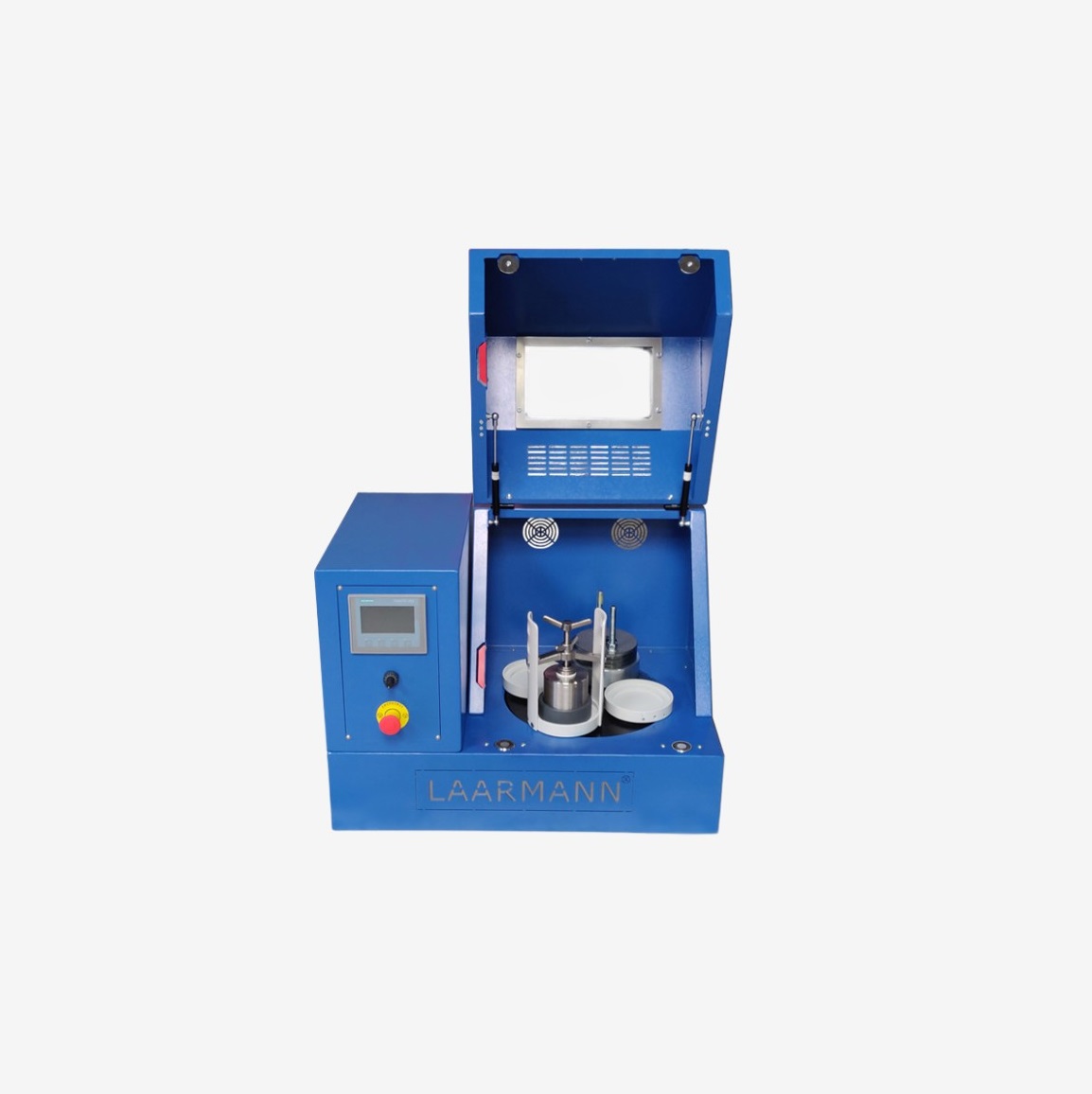
A planetary ball mill is an advanced laboratory grinding instrument used to reduce particle size, prepare fine powders, and homogenize materials. It is widely used in research laboratories, material testing facilities, chemical industries, and quality control laboratories. Its unique grinding mechanism enables efficient processing of different materials through controlled impact and friction.
Understanding how a planetary ball mill works helps researchers and laboratory professionals select the right equipment for sample preparation. Ark Scientific offers the LM PBM Planetary Ball Mill, designed for dry and wet grinding of organic and inorganic samples across various laboratory applications.
What Is a Planetary Ball Mill?
A planetary ball mill is a grinding machine that uses rotating jars containing grinding balls to crush and refine materials into smaller particles. Unlike conventional grinding equipment, it combines two rotational movements to generate high-energy grinding forces.
The machine consists of a rotating platform called a sun wheel, grinding jars, grinding balls, and a drive system. The sample is placed inside the jars along with suitable grinding media. During operation, the movement of the jars and balls generates repeated impacts and friction that gradually reduce the particle size.
Planetary ball mills are suitable for grinding soft, hard, brittle, and fibrous materials, depending on the sample properties and equipment configuration.
How Does a Planetary Ball Mill Work?
The working principle of a planetary ball mill is based on impact and friction produced by the combined rotation of the grinding jars and the sun wheel.
1. Loading the Sample and Grinding Balls
The material to be processed is placed inside a suitable grinding jar along with grinding balls. The jar and ball materials should be selected according to the sample's hardness, chemical properties, and contamination requirements.
Proper loading is essential for allowing the grinding media to move effectively during operation.
2. Rotation of the Sun Wheel
When the machine starts, the sun wheel rotates around its central axis. The grinding jars mounted on the platform move around the centre of the machine, similar to planets orbiting the sun.
This movement creates centrifugal forces that contribute to the acceleration of the grinding media inside each jar.
3. Self-Rotation of the Grinding Jars
At the same time, each grinding jar rotates around its own axis, typically in the opposite direction to the sun wheel. This combination of revolution and self-rotation creates complex movement patterns inside the jars.
The resulting forces accelerate the grinding balls, allowing them to collide with the sample and the inner walls of the grinding jar.
4. Impact and Friction Reduce Particle Size
As the grinding balls move, they repeatedly strike and roll over the sample material. High-energy impacts break larger particles into smaller fragments, while friction contributes to further size reduction.
Repeated grinding gradually produces finer material. Depending on the sample, grinding duration, speed, grinding media, and other operating conditions, the process can achieve very fine particle sizes.
Important Features of a Planetary Ball Mill
The LM PBM Planetary Ball Mill from Ark Scientific is designed for laboratory grinding, mixing, and homogenization. Its listed features include:
- Fine grinding performance: Designed to achieve an end fineness below 1 μm under suitable conditions.
- Flexible jar capacities: Grinding jars are available in volumes ranging from 50 ml to 500 ml.
- Multiple jar positions: Configurations support one, two, three, or four grinding jars.
- Programmable controls: Digital adjustment of grinding duration helps improve process repeatability.
- Automatic direction reversal: Interval operation with direction reversal helps manage grinding patterns and reduce agglomeration.
- Dry and wet grinding: Suitable for processing a range of organic and inorganic samples.
- Easy cleaning: The design supports convenient cleaning and grinding jar and ball exchange.
The manufacturer notes that achievable fineness depends on the feed material, instrument configuration, and operating settings.
Applications of Planetary Ball Mills
Planetary ball mills are used in various laboratory and research applications, including:
Material science: Preparing fine powders for studying material properties and developing new materials.
Chemical research: Grinding and homogenizing samples for laboratory experiments and analysis.
Mechanical alloying: Supporting the mixing and processing of powders to develop specialised material compositions.
Quality control: Preparing samples for testing and analytical procedures.
Ceramics and minerals: Reducing particle size for research, sample preparation, and material evaluation.
The appropriate grinding conditions depend on the properties of the sample and the objectives of the application.
Factors to Consider When Using a Planetary Ball Mill
To achieve consistent grinding results, laboratories should consider several important factors. These include the initial feed size, grinding speed, processing time, ball size, grinding jar material, and sample quantity.
The LM PBM product page specifies a maximum feed size below 10 mm. Users should also select suitable grinding media and jar materials to minimise contamination and ensure compatibility with the sample.
For heat-sensitive materials, monitoring the temperature and using appropriate pauses between grinding intervals may help protect sample quality. Following the equipment manufacturer's operating and safety instructions is essential.
Conclusion
A planetary ball mill works by combining the rotation of a sun wheel with the self-rotation of grinding jars. This movement creates impact and friction, enabling efficient particle size reduction, fine powder preparation, and sample homogenization.
The LM PBM Planetary Ball Mill from Ark Scientific provides configurable grinding jar capacities, programmable operation, and dry and wet grinding capabilities for laboratory applications. Understanding its working principle and selecting appropriate operating conditions can help laboratories obtain reliable and repeatable sample preparation results.
To explore the equipment specifications and suitability for your application, visit the LM PBM Planetary Ball Mill product page.