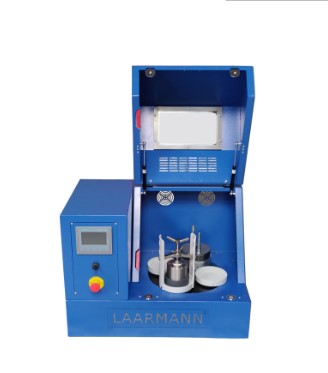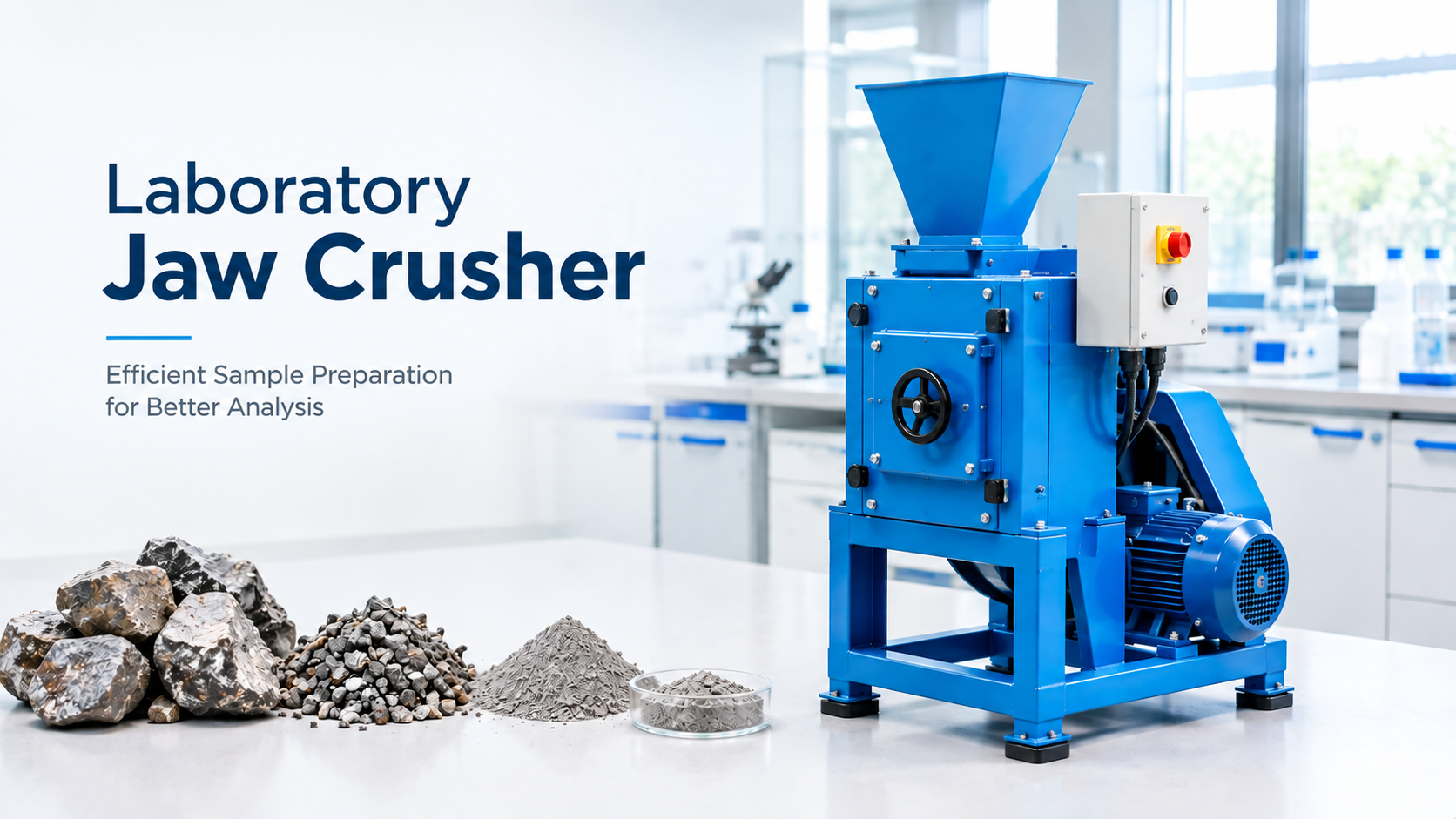
Sample preparation is an important part of laboratory testing, research, mineral analysis, and material characterization. Before a sample can be processed through fine grinding or other analytical equipment, it often needs to be reduced to a suitable and consistent particle size.
A Laboratory Jaw Crusher is designed for this initial size-reduction stage. It uses mechanical crushing between a fixed jaw and a moving jaw to break hard and brittle materials into smaller particles that can be processed further.
For laboratories working with rocks, ores, soil, minerals, and other solid materials, selecting the right Jaw Crusher for Laboratory applications can improve sample preparation efficiency, repeatability, and overall testing performance.
What Is a Laboratory Jaw Crusher?
A laboratory jaw crusher is a compact or specialized crushing machine developed for reducing solid materials into smaller particles for laboratory analysis and sample preparation.
Unlike large-scale industrial crushers, laboratory models are designed with laboratory workflows in mind. Important factors include controllable particle size, easy cleaning, reproducible gap adjustment, material compatibility, and convenient sample collection.
ARK Scientific's jaw crusher range includes models designed for different laboratory and processing requirements, including the LMC50, LMC100D, LMC200D and LMC400. The range also includes larger-capacity crushing equipment and fine-crushing solutions.
How Does a Jaw Crusher for Laboratory Applications Work?
The basic operating principle of a Jaw Crusher for Laboratory applications is relatively simple.
The material is introduced into the crushing chamber through the feed opening. Inside the chamber, the material is compressed between a stationary jaw plate and a moving jaw plate. As the moving jaw applies mechanical force, the material breaks into smaller pieces.
The crushed material continues through the crushing chamber until it reaches the selected outlet gap and falls into the sample collection area.
The gap between the jaw plates plays an important role in determining the resulting particle size. Several ARK Scientific LMC models provide adjustable gap settings, allowing operators to select an appropriate crushing configuration for the material and application.
Why Is a Laboratory Jaw Crusher Important for Sample Preparation?
Good sample preparation is essential for obtaining reliable and repeatable analytical results.
A suitable Laboratory Jaw Crusher can provide several benefits:
1. Efficient size reduction
Hard and brittle materials can be reduced quickly before subsequent grinding or analytical processes.
2. Consistent particle size
Adjustable crushing gaps help operators control the output size according to the requirements of the next stage of sample preparation.
3. Repeatable sample preparation
Reproducible gap adjustment can help laboratories maintain more consistent preparation conditions between samples.
4. Easy cleaning
Cross-contamination can be an important concern when different materials are processed. Easy access to the crushing chamber makes cleaning and changing crushing components more convenient.
For example, the LMC100D features front-door access and a removable infeed hopper, allowing the crushing chamber to be accessed for cleaning.
5. Compatibility with different materials
Depending on the model and configuration, laboratory jaw crushers can be used for materials such as rocks, ores, soil and other solid samples.
What Materials Can Be Crushed in a Laboratory Jaw Crusher?
A Laboratory Jaw Crusher is commonly used for the initial reduction of materials such as:
- Rocks
- Minerals
- Ores
- Soil
- Geological samples
- Hard and brittle materials
- Construction and industrial material samples
The appropriate crusher configuration depends on factors such as material hardness, feed size, required final particle size, throughput, and the desired level of contamination control.
ARK Scientific's product information specifically describes its LMC jaw crushers as suitable for crushing materials such as rocks, soil and ores in laboratory and processing applications.
Key Features to Look for When Choosing a Jaw Crusher for Laboratory Use
Choosing the right crusher involves more than looking at motor power. Laboratories should consider the complete sample-preparation process.
Adjustable Crushing Gap
An adjustable gap allows the operator to control the size of the crushed material. For example, the LMC100D has a stepless adjustment range of 0–30 mm, while the LMC200D provides an adjustable range of 0–25 mm.
Suitable Feed Size
The maximum feed size should match the type and dimensions of samples normally handled by the laboratory.
For example, the LMC100D has a jaw inlet of 130 × 100 mm and a maximum feed size of 115 × 90 mm.
Desired Final Fineness
Different laboratory applications require different output sizes.
The LMC100D can achieve product sizing below 2 mm at minimum adjustment, while the LMC200D is specified for product sizing below 4 mm.
Jaw Plate Material
The jaw plate material should be selected according to the sample being processed and the required contamination-control level.
Available options on the LMC100D include hardened steel, manganese steel, tungsten carbide, heavy metal-free steel and stainless steel.
Cleaning and Maintenance
Easy access to the crushing chamber can reduce cleaning time and make routine maintenance easier.
This is particularly important for laboratories that process different samples throughout the day.
Throughput
Laboratories with higher sample volumes should consider crusher capacity and throughput. The appropriate model depends on the amount of material that needs to be processed and the required particle size.
Laboratory Jaw Crusher Models from ARK Scientific
ARK Scientific offers a range of jaw crushers designed for different sample preparation requirements.
LMC50 Jaw Crusher
The LMC50 is a compact jaw crusher designed for laboratory applications. It is intended for crushing materials such as rocks, soil and ores, with an adjustable end-fineness setting from 0.5 to 11 mm and a maximum throughput of approximately 50 kg/h, depending on material and configuration.
LMC100D Jaw Crusher
The LMC100D is designed for rapid reduction of hard and brittle materials. It provides stepless gap adjustment and can achieve end fineness below 2 mm under specified conditions. The model has a 3 kW three-phase motor and a throughput of up to approximately 250 kg/h, depending on the material and settings.
LMC200D Jaw Crusher
The LMC200D is a larger laboratory and processing solution with a 5.5 kW three-phase motor. It provides stepless gap adjustment and is specified for product sizing below 4 mm at minimum adjustment. Its throughput can reach approximately 1,000 kg/h depending on the material.
LMC400 Jaw Crusher
The LMC400 is designed for higher-capacity crushing requirements and uses a powerful 15 kW three-phase motor. It offers adjustable gap settings and an end fineness below 6 mm under specified conditions.
How to Select the Right Laboratory Jaw Crusher
Before purchasing a Laboratory Jaw Crusher, consider the following questions:
- What type of material will be crushed?
- What is the maximum feed size?
- What final particle size is required?
- How much sample needs to be processed per hour?
- How frequently will the crusher be used?
- Is contamination control important for the application?
- How frequently will the crushing chamber need to be cleaned?
- What jaw plate material is appropriate?
- Is an adjustable crushing gap required?
- Will the crushed material undergo further grinding?
Answering these questions can help laboratories select a crusher that fits their sample-preparation workflow.
Laboratory Jaw Crusher in India: What Should Buyers Consider?
When looking for a Laboratory Jaw Crusher in India, laboratories should evaluate more than the initial equipment cost.
Important considerations include:
- Technical specifications
- Feed size and output size
- Crushing capacity
- Jaw plate material
- Ease of cleaning
- Availability of replacement components
- Installation requirements
- Technical support
- Application suitability
- Long-term operating requirements
A proper equipment selection process can help laboratories avoid choosing a crusher that is either too small for their workload or unnecessarily large for their application.
Laboratory Jaw Crusher vs. Conventional Industrial Crusher
A laboratory crusher is primarily intended for controlled sample preparation, testing, research, and material analysis.
A conventional industrial crusher may be designed for continuous high-volume production.
The right choice therefore depends on the intended application. A research laboratory processing geological samples, for example, may prioritize reproducibility, cleaning, sample integrity, and particle-size control rather than maximum industrial throughput.
Why Gap Adjustment Matters in Laboratory Crushing
Gap adjustment is one of the most important characteristics of a jaw crusher.
A smaller gap generally produces a smaller crushed product, while a larger gap allows larger particles to pass through. Reproducible adjustment is particularly useful when laboratories need to maintain consistent sample-preparation conditions.
The LMC100D, for example, uses a hand wheel and scale for stepless gap adjustment and includes zero-point calibration functionality.
Reducing Cross-Contamination During Sample Preparation
Cross-contamination can affect laboratory analysis, particularly when different samples are processed using the same equipment.
A suitable Jaw Crusher for Laboratory applications should therefore allow the crushing chamber and grinding components to be cleaned efficiently.
ARK Scientific's LMC range provides features such as accessible crushing chambers and interchangeable jaw plates and side liners. Some configurations also provide different grinding-tool materials to support different sample requirements.
Applications of Laboratory Jaw Crushers
Laboratory jaw crushers can be useful across several industries and research areas, including:
Geological and Mineral Research
Crushing rocks and mineral samples before further grinding and analysis.
Mining and Metallurgy
Preparing ore and mineral samples for laboratory testing.
Material Testing
Reducing solid samples to an appropriate size for subsequent testing procedures.
Research and Development
Preparing small quantities of experimental materials for laboratory analysis.
Quality Control
Producing representative samples for routine material testing and quality-control procedures.
ARK Scientific also lists applications involving materials such as quartz and dolomite processed using the LMC100D Jaw Crusher.
Conclusion
A Laboratory Jaw Crusher is an important piece of equipment for laboratories that require controlled and efficient reduction of hard, brittle and solid materials.
When choosing a Jaw Crusher for Laboratory applications, laboratories should consider feed size, required final fineness, throughput, gap adjustment, jaw plate material, cleaning requirements and contamination control.
For laboratories searching for a Laboratory Jaw Crusher in India, selecting equipment based on the actual sample-preparation requirements is more important than choosing a machine based only on capacity or price.
ARK Scientific offers multiple jaw crusher models for laboratory and processing applications, including the LMC50, LMC100D, LMC200D and LMC400, allowing users to select equipment according to their material, capacity and particle-size requirements.
Looking for the right jaw crusher for your laboratory? Explore ARK Scientific's laboratory jaw crusher range and select a model based on your sample type, feed size, required final fineness and processing capacity.