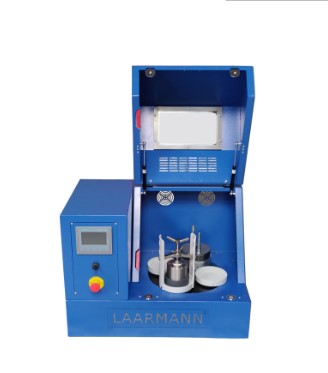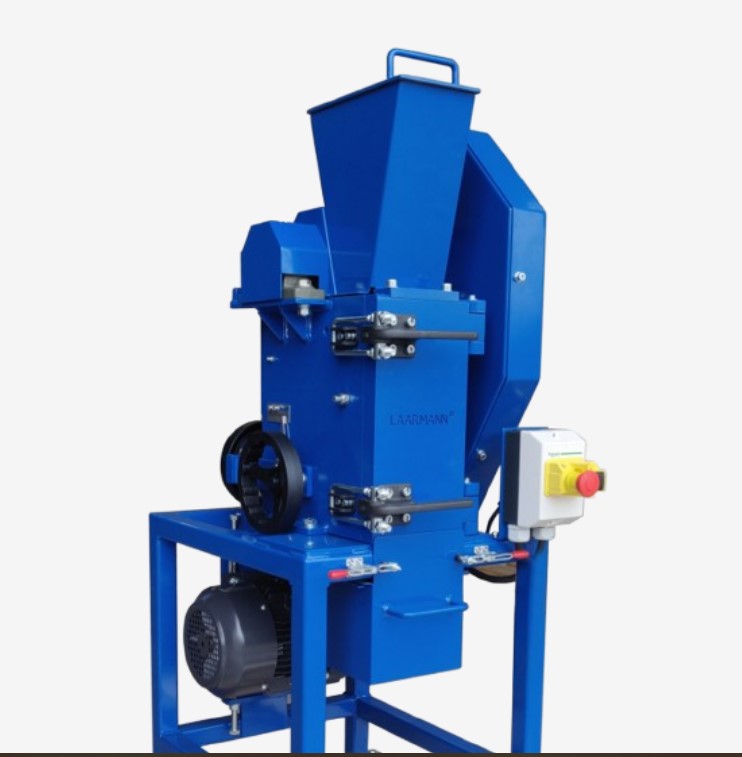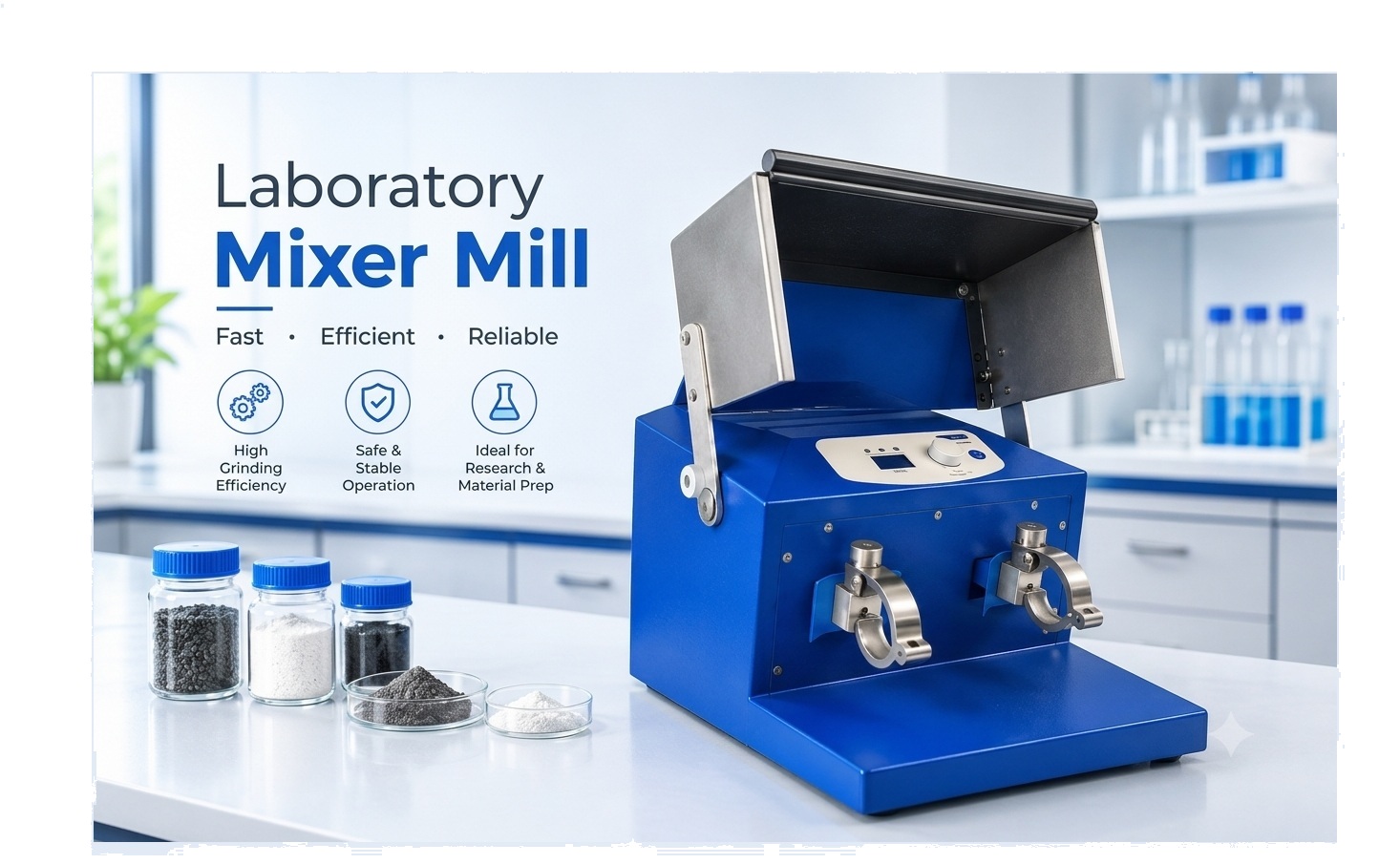
Efficient sample preparation is an important part of laboratory testing, research, and material analysis. Samples often need to be reduced in size, homogenized, blended, or disrupted before they can be analyzed accurately. A Laboratory Mixer Mill provides a versatile solution for these requirements by combining high-energy grinding and mixing in a compact laboratory system.
The LAARMANN Mixer Mill available through Ark Scientific is designed for a wide range of laboratory applications, including dry and wet grinding, ultra-fine grinding, cryogenic grinding, blending, dispersion, mechanical alloying, XRF sample preparation, and cell disruption. Depending on the configuration, the equipment can process multiple samples with volumes ranging from approximately 0.2 ml to 160 ml.
What Is a Laboratory Mixer Mill?
A Mixer Mill is a high-energy laboratory machine used to grind, mix, homogenize, and process samples. It uses grinding jars and grinding media to subject samples to rapid mechanical forces.
Unlike conventional manual grinding, a mixer mill allows laboratory users to control important processing parameters digitally. This makes it suitable for applications where reproducibility, rapid processing, and consistent sample preparation are important.
The LAARMANN® Mixer Mill is designed to accommodate different grinding jars and accessories, allowing the same basic system to be configured for different laboratory processes.
How Does a Laboratory Mixer Mill Work?
The working principle of a Mixer Mill is based on the high-energy movement of grinding jars and grinding balls.
A sample is placed inside an appropriate grinding jar along with the selected grinding media. When the machine operates, the grinding action produces repeated impacts and friction between the grinding media, sample, and jar.
This mechanical action can break down particles and promote efficient homogenization. The equipment can process hard and brittle materials as well as medium-soft, soft, and elastic materials, depending on the selected configuration and operating conditions.
The main stages of the process are:
- Sample loading: The required quantity of material is placed into a suitable grinding or mixing jar.
- Selection of grinding media: Grinding balls and jar materials are selected according to the sample and application.
- Parameter setting: Operating parameters such as vibration frequency and processing time are selected.
- High-energy processing: The movement of the grinding jar produces impact and friction forces that grind and homogenize the sample.
- Sample recovery: After the programmed cycle, the processed material is removed for further laboratory analysis.
The LAARMANN® system provides digitally adjustable vibration frequency from 3 to 30 Hz, with fine adjustment in 0.1 Hz steps.
Grinding, Blending, and Cell Disruption in One System
One of the major advantages of this type of Laboratory Mixer Mill is its versatility. Rather than being limited to conventional grinding, the system can be configured for several different laboratory processes.
Dry Grinding
Dry grinding is used when samples need to be processed without adding a liquid medium. The mixer mill can be used for reducing solid materials and preparing samples for subsequent analytical procedures.
Wet Grinding
Wet grinding involves processing samples with a suitable liquid medium. This can be useful when the application requires controlled dispersion or when wet processing is more suitable for the material.
Ultra-Fine Grinding
For applications requiring significant particle-size reduction, the high-energy grinding action of the mixer mill can be used for ultra-fine grinding, depending on the sample properties and selected configuration.
Cryogenic Grinding
Some materials become difficult to grind because they are soft, elastic, or sensitive to heat. Cryogenic grinding can help make temperature-sensitive materials more brittle before or during grinding.
The product page specifically describes cryogenic grinding for materials such as plastics and rubber using appropriate frozen grinding jars and an insulated ice bath.
Cell Disruption
The Mixer Mill can also be configured for biological sample disruption. Micro-vial adapters can accommodate multiple small vials for applications involving microorganisms, plant tissue, animal tissue, spores, and soil samples.
According to the product information, the system can achieve more than 95% cell disruption within two minutes under the stated configuration and conditions. Disposable balls and vials can also be used where minimizing cross-contamination is important.
Applications of Laboratory Mixer Mill
The versatility of a Mixer Mill makes it suitable for several research, testing, and analytical applications.
1. Pharmaceutical Research
Pharmaceutical laboratories often require controlled sample preparation before analysis. A mixer mill can be used for grinding and homogenizing suitable pharmaceutical materials and laboratory samples.
The ability to use different grinding jars and accessories allows the equipment to be adapted to different sample types and processing requirements.
2. Chemical Analysis
Chemical laboratories can use mixer mills for preparing solid samples for analysis. Grinding and homogenization can help create a more representative sample before instrumental or chemical testing.
3. Material Science
Researchers working with materials such as ceramics, minerals, polymers, glass, and other solids can use a Mixer Mill for controlled particle-size reduction and sample homogenization.
The product information demonstrates applications involving materials including soil, glass, paper, and rubber.
4. XRF Sample Preparation
Consistent sample preparation is particularly important for analytical techniques such as X-ray fluorescence. The mixer mill can be used for grinding and mixing samples intended for XRF analysis.
5. Geological and Soil Testing
Soil and geological materials may require grinding before laboratory analysis. The product page provides an example in which soil was processed to approximately 40 microns after 45 seconds, depending on the material and configuration.
6. Biological Sample Preparation
With appropriate micro-vial accessories, the mixer mill can be used for cell disruption and homogenization of biological materials. This makes it relevant for applications involving DNA and RNA extraction, PCR, PAGE, and probe-related sample preparation.
7. Mechanical Alloying
A Mixer Mill can also support mechanical alloying applications where repeated high-energy mechanical action is used to process selected material combinations.
8. Mixing and Dispersion
The system is not limited to solid grinding. Specific static mixing accessories can be used for turbulent blending, laminar blending, liquid-liquid dispersion, and gas-liquid dispersion.
Static Mixing with a Mixer Mill
Another notable application is static mixing.
The mixer mill can be equipped with grinding jars containing helical static mixing elements. These elements direct material flow toward the walls and back toward the center. Alternating right- and left-hand elements create changes in flow direction and divide the material stream, promoting efficient mixing.
This configuration can be used for applications involving:
- Turbulent blending
- Laminar blending
- Liquid-liquid dispersion
- Gas-liquid dispersion
The product information also gives a honey-and-water example using a 160 ml steel jar with a static mixer to produce a homogeneous mixture.
Key Benefits of a Laboratory Mixer Mill
Rapid Sample Processing
A major advantage is the short processing time possible for many applications. The product page states that typical processing times can be around 30 seconds, although actual performance depends on the feed material and equipment configuration.
High Sample Throughput
The system can process two or more samples and is designed for sample volumes ranging from approximately 0.2 ml up to 160 ml, depending on the selected configuration. This makes it useful for laboratories handling different sample quantities.
Reproducible Processing
Digital presetting of working parameters helps users establish repeatable processing conditions. This can be particularly useful when laboratories need consistent sample preparation across multiple batches.
Multiple Grinding and Mixing Options
The availability of different grinding jars, grinding media, micro-vial adapters, and mixing accessories gives laboratories flexibility when working with different materials.
Safety-Oriented Design
The equipment incorporates an Easy Cover system and motor brake. According to the product information, operation is enabled when the cover is securely closed, while the Easy Clamp system is designed for safe and convenient clamping of grinding jars.
Suitable for Different Material Types
With the appropriate setup, the mixer mill can process hard and brittle materials as well as softer and elastic materials. Cryogenic accessories can further extend its suitability for temperature-sensitive materials.
Grinding Jars and Accessories
Choosing the appropriate grinding jar and accessory is an important part of obtaining suitable results from a Mixer Mill.
Available configurations can include different jar materials and sizes, grinding media, micro-vial holders, static mixing elements, and cryogenic accessories.
For example, the product page describes:
- Stainless-steel micro vials for small-sample grinding
- Grinding jars for dry and wet grinding
- Static mixing jars for blending and dispersion
- Micro-vial adapter plates for multiple small samples
- Tungsten carbide and other grinding beads
- Insulated ice-bath equipment for cryogenic grinding
The correct combination depends on the material being processed, required particle size, sample quantity, contamination considerations, and the intended analytical application.
Examples of Mixer Mill Performance
The actual processing result depends on sample characteristics, grinding media, jar configuration, frequency, and processing time. The product page provides several examples:
- Soil: approximately 40 microns after 45 seconds using a 100 ml steel jar and 25 mm steel ball.
- Paper: approximately 200 µm after 90 seconds using a 100 ml jar and 25 mm steel ball.
- Glass: approximately 100 µm after 45 seconds using a 50 ml steel jar and 25 mm steel ball.
- Rubber: processed using a 50 ml steel jar and 20 mm steel ball after cryogenic treatment.
These examples demonstrate why grinding parameters and accessories should be selected according to the specific sample rather than applying a single setting to every material.
Technical Specifications
The product information lists the following technical data for the Mixer Mill:
|
Specification |
Details |
|
Power supply |
230 V ± 10%, 50/60 Hz |
|
Rated power |
200 W |
|
Fuses |
2 × T2A 250 V |
|
Maximum milling-cup volume |
2 × 50 ml |
|
Dimensions |
385 × 420 × 240 mm |
|
Weight |
42 kg |
|
Vibration frequency |
Digital, 3–30 Hz |
|
Speed range |
180–1800 min⁻¹ |
|
Frequency adjustment |
0.1 Hz steps |
The stated results and performance can vary according to feed material, instrument configuration, and operating settings.
How to Select the Right Laboratory Mixer Mill Configuration
Before selecting a mixer mill setup, laboratories should consider the following factors:
Sample Type
Determine whether the sample is hard, brittle, soft, elastic, heat-sensitive, biological, or liquid-based. This will influence the grinding or mixing configuration.
Required Particle Size
The target particle size should be established before selecting the grinding jar, grinding media, and operating conditions.
Sample Quantity
Consider whether the application involves micro-scale samples or larger laboratory batches. The available configurations cover sample quantities from very small volumes through larger laboratory-scale processing.
Temperature Sensitivity
For samples that may soften, deform, or degrade because of heat generated during grinding, cryogenic processing may be appropriate.
Contamination Requirements
For sensitive analytical applications, the material of the grinding jar and balls should be selected carefully. Disposable micro-vials may be useful for applications where cross-contamination needs to be minimized.
Why Sample Testing Can Be Useful Before Purchase
Laboratory grinding results can vary significantly from one material to another. Factors such as hardness, elasticity, moisture, particle size, and temperature sensitivity can all affect the final result.
For this reason, the Ark Scientific product page invites customers to send samples for evaluation through its application laboratory. Pre-purchase test grinding can help determine whether the equipment and selected configuration are suitable for a specific application.
Conclusion
A Mixer Mill is more than a conventional sample grinder. With the appropriate jars, grinding media, and accessories, it can support grinding, homogenization, blending, dispersion, mechanical alloying, cryogenic processing, and biological cell disruption.
The LAARMANN® Mixer Mill presented by Ark Scientific is designed for applications requiring rapid and reproducible laboratory sample preparation. Its digitally adjustable operating parameters, multiple accessory options, safety-oriented clamping system, and ability to handle different sample types make it a flexible solution for research and analytical laboratories.
For laboratories evaluating a mixer mill, the most important step is to match the machine configuration to the material, required particle size, sample quantity, processing method, and analytical objective. Where the application is uncertain, sample testing can provide useful information before selecting the final configuration.